Andrew J Lewis
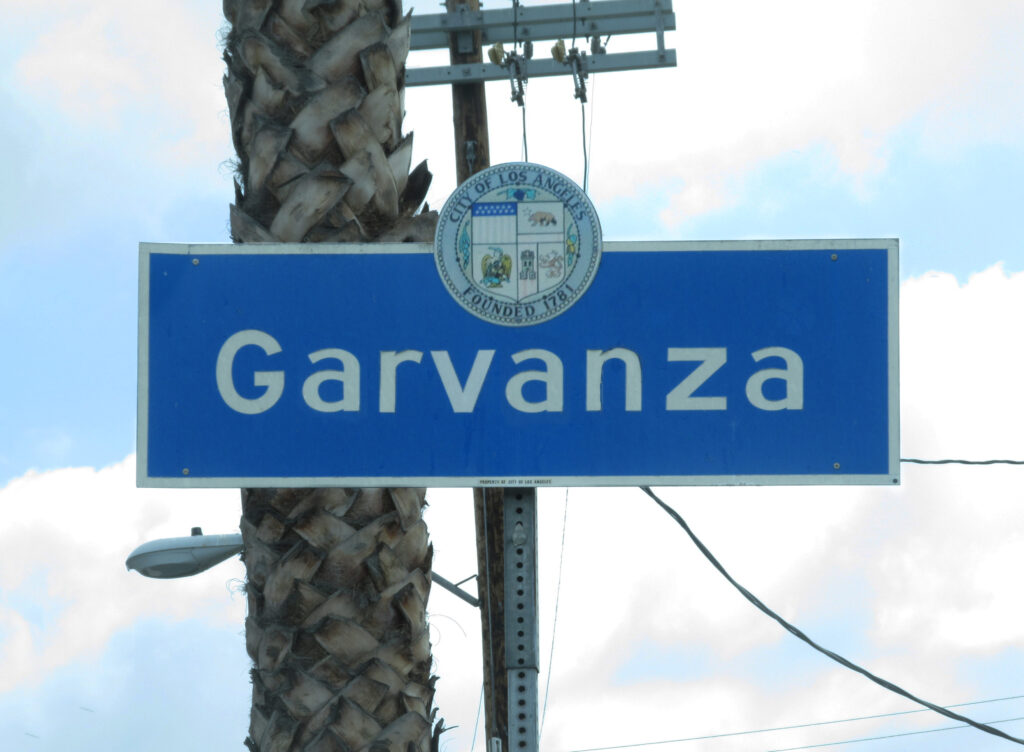
I lived at this address from August 2000 to July 2001. Upper level. One-bedroom. In Garvanza, a part of Los Angeles it seemed only I knew about. The front windows faced the San Gabriels, which meant I could watch the mountains and the light change over the course of the day, over the course of the season, sometimes over the course of an hour.
It was a good place to work, in the practical sense. Quiet enough. Just removed from the main movement of things. York Boulevard was where that happened—traffic, errands, the small churn that passed for a center in Garvanza. From the apartment you could hear York at certain hours, a steady presence without being inside it, and almost always the steadier hum of the 110 beyond the view.
Most days followed a simple pattern. Morning at the apartment, working at a table by the window. Then the drive to the Huntington Library, where I was supposed to be studying the history of natural history in a rare book library set inside a set of gardens designed to make nature feel ordered, legible, preserved. Then back again, the same route, the same light, the same return to the apartment.
From the desk, the mountains were the reference point. They held steady even as they changed. Light would move across them in long, deliberate passes. Some days they were sharp, almost architectural. Other days they softened into the haze and felt further away than they were.
I watched them because I could. It snows in Los Angeles more than I imagined.
It took me a while to notice that something else had begun to require the same kind of attention.
There wasn’t a moment where anything announced itself. No clear break. Just a series of small adjustments. Movements that had always been automatic now requiring a fraction more thought. A slight hesitation where there had been none. A sense, at times, that the body was arriving a half-beat after the intention.
On a hike that winter, I had to sit down earlier than I should have. Not dramatically, not in a way that drew attention. Just a recognition that continuing in the same way wasn’t going to work. Heat, maybe. Not enough water, yes. It was easy to account for at the time.
Back at the apartment, the days continued. Work that required sustained attention, even as attention itself became harder to hold. The expectation—finish the dissertation, finish the degree—remained unchanged. So, the work continued as well.
At some point—I don’t remember exactly when—I tried to come up on my toes.
Nothing happened.
Not pain. Not failure, exactly. Just absence. The instruction went out. The response did not return in the way it always had. A relationship broken.
After that, it was harder not to notice.
The same routines, the same routes, the same view from the window. The mountains continued their slow, legible changes. The gardens at the Huntington continued to present a version of nature that could be studied, categorized, understood.
The body was less cooperative. Not in a dramatic sense, not in a way that could be named cleanly day to day. Just a growing sense that something that had always been reliable was now conditional.
The work still got done. Slowly. Unevenly. There were long stretches where it felt impossible to hear a clear line of thought, let alone follow it through to the end. And then, somehow, enough of it accumulated.
The dissertation got finished. The degree awarded. A job offered before the work was fully complete, on the strength of what it might become.
At the time, none of that felt like a victory.
It just felt like continuation.
York Boulevard carried on a block away, the same steady movement of cars and errands and ordinary life. I was close enough to hear it without being inside it. Most days, that was enough to remind me that the rest of Los Angeles was continuing too.
On Thorne, I kept working. Kept returning to the desk, the mountains, the Huntington, the same small set of movements that still worked.
Nothing was decided all at once. There was no diagnosis yet, no explanation that gathered the scattered signals into a story. There was only the work in front of me and a body that required slightly different negotiations than it had before.
So I continued.
With more distance than I realized I needed, I understand that year differently now. The dissertation got finished while something else was beginning. I did not overcome it. I did not understand it. I certainly did not defeat it.
I kept going without knowing what, exactly, I was going through.
At the time, that did not feel like courage. It did not feel like resilience. It did not feel like much of anything.
It felt like continuation.
Twenty-five years later, I think that was the victory.