Andrew J Lewis
Dear Gus,
I have another research question. Before you stop reading: this one does not involve eighteenth-century ornithology. Entirely. Most of it is nineteenth-century ornithology.
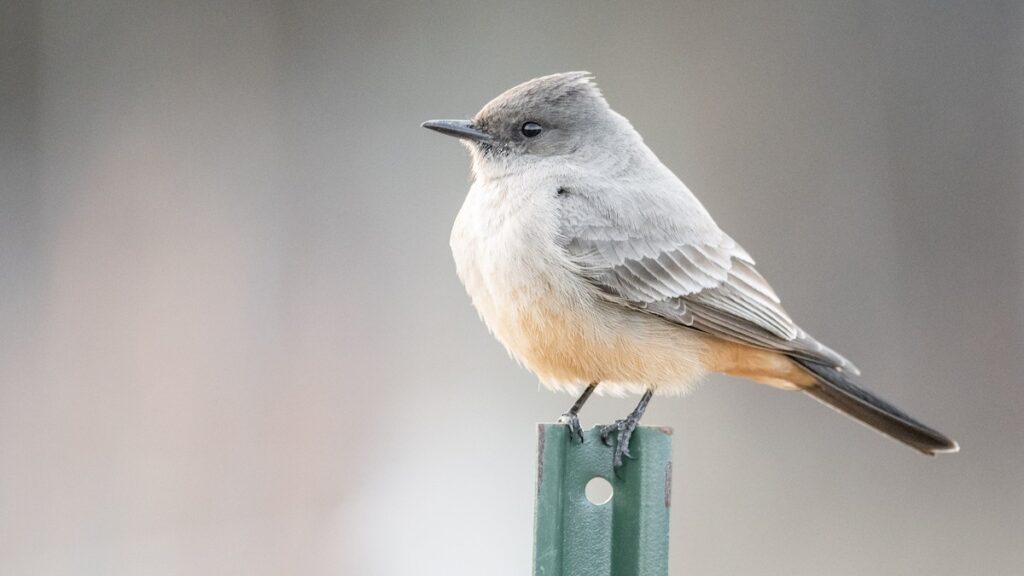
As you know, Say’s Phoebe is Sayornis saya, named for the ferociously famous early-republic entomologist Thomas Say. As you’ll doubtless recall, Lucien Napoleon Bonaparte (yes, that Bonaparte; nephew, not grandson) named the genus Sayornis for his friend, who died so young, in 1834.
Which gives us, through a perfectly defensible sequence of common name, genus, and species: Say. Say. Say.
Now, in 1983, Paul McCartney and Michael Jackson released the collaboration ‘Say Say Say.’
Gus, I need to know whether this was a coincidence. Now, I recognize that the Cornell Lab of Ornithology possesses finite institutional resources and social capital, and that ordinarily these should be deployed toward bird conservation, migration science, public education, and other matters of consequence.
But there is only one surviving member of the McCartney-Jackson songwriting partnership who can definitively settle whether Sayornis saya exerted any influence on the composition of ‘Say Say Say.’
Michael Jackson is dead. Paul McCartney is not. But—and I don’t mean to alarm anyone—he is not getting younger. So, there is, in fact, a closing research window.
I am not suggesting that the Cornell Lab recklessly expend its entire Paul McCartney relationship, assuming such a relationship exists. I am merely asking whether someone might know someone who knows someone who could, at an appropriate moment, say:
Sir Paul, sorry, one quick question from the ornithologists: Say’s Phoebe. Any role whatsoever?
A simple yes or no would suffice.
If yes, obviously, we have substantially underestimated the influence of nineteenth-century American taxonomy on 1980s popular music. If no, fine. Science advances through negative findings too.
Thank you for your consideration.
Andrew
P.S. Please understand that I am not actually sending you this email, which I think demonstrates admirable professional restraint.