Andrew J Lewis
I have recently resumed practicing history, sort of. An academic definition of what I am doing is probably better described as Historianishing.
Historianishing is what happens when someone who was once deeply trained as a historian wanders back toward the profession after near twenty years and discovers that the intellectual machinery still works reasonably well but most of the labels have fallen off. (This is not amateur history, firstly. We cannot have amateurs degrading the profession of degraded professionalism, okay. Second…)
Anyway, I’ve apparently been historianishing for a while without knowing it. My wife and kids sensed it but let me realize at my own pace. The full extent of my condition became apparent during a recent visit to the National Portrait Gallery in Washington, D.C., where I discovered any number of dead Americans hanging on the walls with whom I have some seriously unfinished business.

John Winthrop, for example. He’s in the first room. Twelve-time, non-consecutive governor of Massachusetts Bay—assuming I am remembering that correctly, which is precisely the problem—and we just started up pretty much where we left off.
Hello, John. It’s been a while. Except I am now considerably more seasoned in the ways of the world, and you are still dead. You appear still burdened by your Puritan dilemmas: your Anne Hutchinsons, your Roger Williams, and so on. Oh!, that City on a Hill line? Banger.
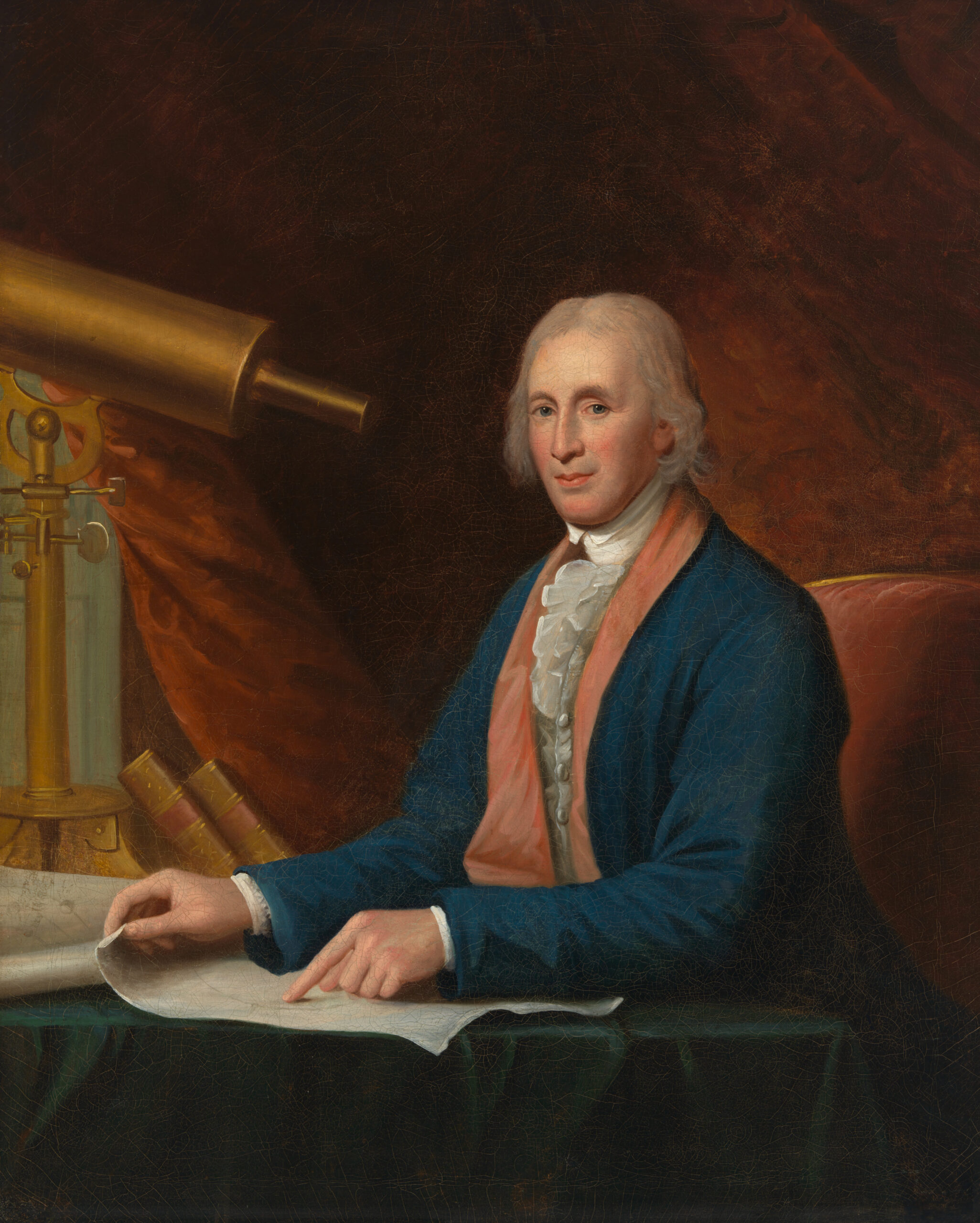
I had an investor meeting down the street and was killing time so there was no possible way I could stop to reopen discussions with everybody. Pocahontas is in the same room as Winthrop, a polite nod: madam, hello, good to see you. David Rittenhouse was there. Frederick Douglass. Others. Gentlemen, I know. Ladies, too. I hear you all. There are simply a lot of you, and I only had so much time.
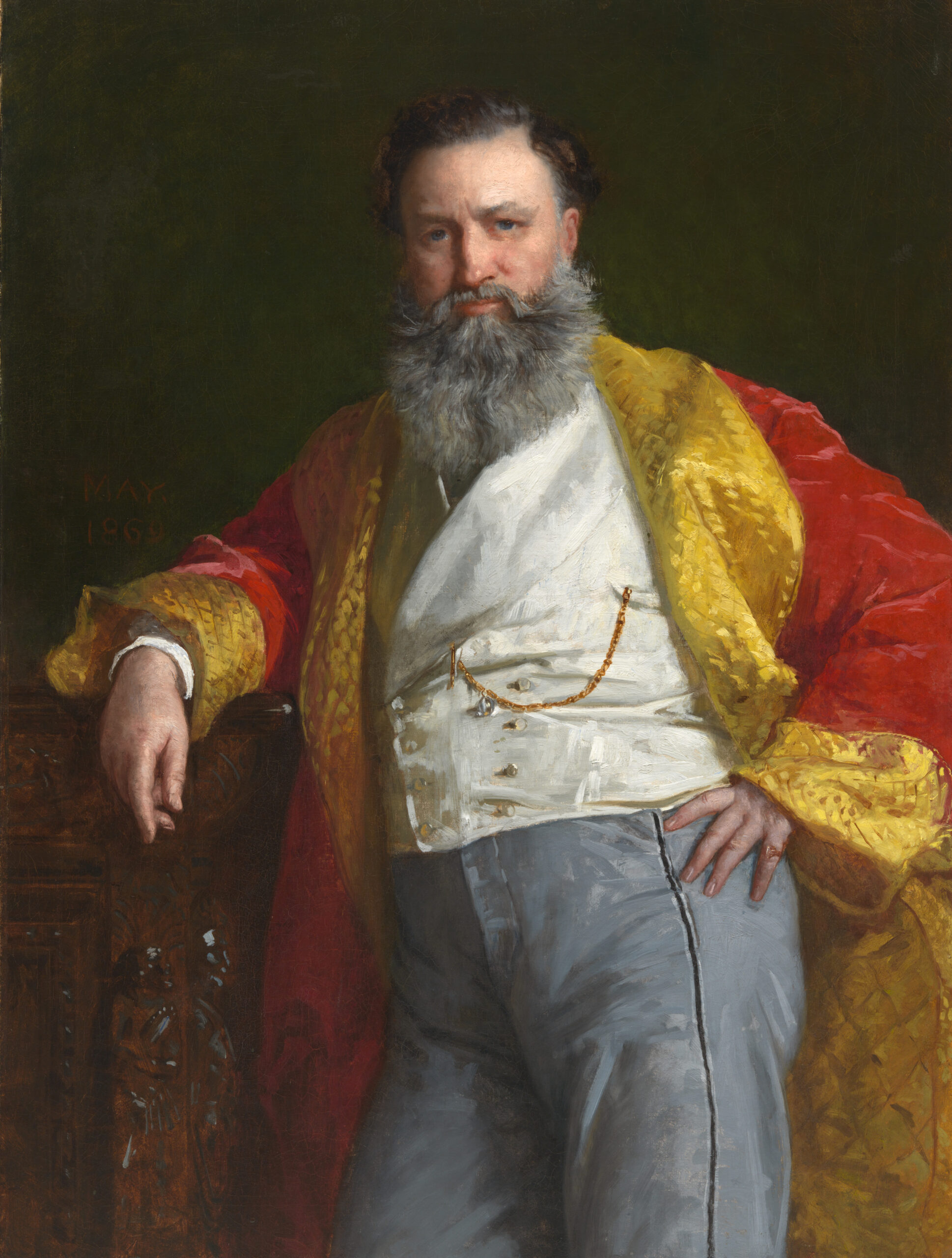
But then I encountered Isaac Merritt Singer, my card catalog whirring: sewing machines. Industrialization. Manufacturing. Patents. Consumer capitalism. All the appropriate professional-historian drawers opened correctly. And then I learned—or perhaps relearned, because this is another occupational hazard of historianishing—rather more about Singer’s domestic life.
What the holy expletive, Singer? I raised a family while I was away. What the heck were you doing?!
And before anybody gives me the nineteenth-century-context argument: his contemporaries were aghast and scandalized too. This was not appropriate behavior then. It is not appropriate behavior now. And while professional historians should be exceedingly cautious about predicting the future, historianishers can be reasonably confident that this behavior will remain inadvisable going forward.
A Great Re-Awakeninging
I’m also caught, I think, in something like a Great Re-Awakeninging, or perhaps a Second Great Re-Awakeninging. The people I had studied hadn’t changed. They couldn’t. But I had, quite a bit.
I had forgotten an astonishing quantity of information about them. Meanwhile, I had accumulated twenty years of information about everything else: work, institutions, failure, marriage, children, disability, money, ambition, friendship, loss. I was returning to the past simultaneously knowing less history and knowing more life. Apparently, there are still some things to discuss.
Fortunately, a few months earlier, I had stumbled upon an appropriate methodology. In 2025, I revisited some old writing that eventually became an article for Living Bird about an argument over swallows at the birth of the United States. At some point I sent it to Chris Grasso at Brown. Chris has been teaching me history since 1992.
He was my undergraduate advisor at St. Olaf College and helped get me to American Studies at Yale. He remained an off-campus mentor while I was there, read dissertation chapters, worked with me as the editor of my first professional article for the William and Mary Quarterly, and probably read pieces of the book manuscript. I honestly don’t remember.
Because I didn’t get tenure. And I disappeared.
Not immediately and not completely, but effectively. I quit academics and I stopped practicing history. Eventually I stopped answering Christmas cards from former faculty friends and mentors. A few academics remained in my life because by then they were friends who happened to be academics.
And then, two decades later: So, hey, Chris. Remember me and that thing about swallows?
I sent him a draft. He tore the living crap out of it.
So, I sent him another. He expressed a green ooze out of that one.
This was enormously reassuring. A Grasso written piece is a polished stone. Every surface worked, every edge considered, the argument refined until the thing appears to have always possessed its final shape. He learned some of this at Yale with Jon Butler, now emeritus, who also taught me.
The Hunk of Granite
What I brought him was more like a massive hunk of granite, still covered in some dirt and bearing the scars of its recent excavation. I hosed it off, sent it to him, and I imagine he spent some time walking around it.
There was clearly something in there. I still knew enough history to know that. More importantly, I still knew enough to recognize when somebody who knew considerably more told me I was wrong or strike it here.
That may be the essential qualification for historianishing. You cannot just vaguely remember some history and announce what probably happened. You must once have known enough to be wrong with consequence at a professional level. You must have given the sacrifice.
The training remains. The habits remain. You distrust the convenient explanation. You can sometimes feel an anachronism even when you cannot immediately remember why it is an anachronism. You remember that there is scholarship on this question, although regrettably you may no longer remember the scholarship.
So, you reconstruct with what you’ve got. Then you write or call somebody. Resume a relationship.
In my case, I wrote the same person who had been shaping my historical thinking since I was an undergraduate in Northfield, Minnesota.
I sent Chris a hunk of granite. He recognized what I was trying to do. Then he helped me chip away at it.
I changed the argument. He corrected something else. I went back into the sources. He pointed toward something I’d forgotten. I remembered enough to understand the correction, enough to argue back occasionally, and enough to know when not to.
It felt remarkably familiar. I make an absurd, grandiose argument. Chris tells me why it cannot possibly be right, chapter and verse. I return with a somewhat less wrong argument, still grandiose. He discovers several new ways in which it remains still, spectacularly wrong.
Eventually we arrive somewhere around: This is the argument, I think. Which is about as close to certainty as a professional historian ought to get anyway.
And then, apparently, I go back to the National Portrait Gallery on a lark. Well, well, well… Governor Winthrop. What on Earth, Mr. Singer?!
Rittenhouse, Douglass, Phillis Wheatley: I’ll be back. I have forgotten an enormous amount. There are names I cannot retrieve, books I know I read but could no longer summarize, arguments whose outlines remain in my head after almost everything supporting them has disappeared. But some strange amount of the machinery is still there. And, fortunately, so are some of the people who taught me how to use it.
So, I am now a proud practitioner of historianishing. Others may eventually be admitted to this emerging discipline, but standards will have to be developed. Gimme a beat to figure out the rules.
After all: we cannot have amateurs degrading the profession of degraded professionalism.